About Us
The Reproductive Health Access Network mobilizes primary care clinicians nationwide to build power and expand sexual and reproductive health care advocacy and provision in their communities.
The Network is the organizing and advocacy project of the Reproductive Health Access Project, connecting a diverse community of primary care clinicians. We are open to any and all primary care and community-based clinicians, including, but not limited to: family physicians and residents, internal medicine physicians, nurse practitioners, certified nurse midwives, physician assistants, adolescent medicine and pediatrics, advanced practice clinicians, nurses, and others. We bring together said clinicians from all over the country to work together nationally and in local communities to expand access to comprehensive sexual and reproductive health care, including abortion, in their workplaces, institutions, professional associations, and communities.
We pull together over 8,500 primary care clinicians from all 50 states and Washington D.C. to come together virtually and in person to engage in advocacy, clinical training and education, leadership development, and community building. Our aim is to engage members, or Clinician Advocates, to leverage their position, power, and influence to improve their communities’ access to comprehensive sexual and reproductive health care. Clinician Advocates use a Reproductive Justice framework to push for social change locally, in their institutions, statewide, and/or nationally. They affect change through civic and legislative processes, patient advocacy, clinician education, institutional change, mentorship and leadership development, and more.
Much of the Network’s core power-building and organizing work is done through our local chapters, called Clusters. These 27 state-based and four professionally-affiliated groups stay connected through online listservs and meet several times a year virtually or in-person. Each Cluster is led by clinicians from their respective communities in partnership with RHAP staff to set organizing and advocacy goals and pursue projects to protect and expand access to sexual and reproductive health care in their communities.
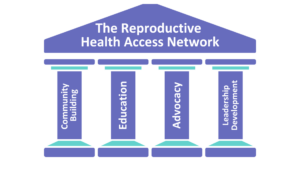
Clusters aim to create change in their communities through:
Community Building – We develop, grow, and sustain local Clusters and national networks for primary care and community-based clinicians to find peer support, networking opportunities, and mentorship. By holding in-person local, state-level, and national gatherings, we bring our community of values-aligned, motivated, and passionate clinicians together to build relationships, trust, and connection. In being together, we strengthen our sense of shared identity, belonging, and a collective understanding of the world we wish to create together. Through such community connection we can reduce burnout and fear and truly mobilize for change.
Clinical Training and Education – We provide clinicians with resources, education, training, and support on sexual and reproductive health care, including abortion, reproductive justice, and other related topics to strengthen their individual practice, training of others, implementation of new services, and advocacy.
Advocacy- We activate and encourage clinician participation in a range of multi-level advocacy by:
- Supporting clinicians to organize within their professional medical organizations, such as the American Academy of Family Physicians, to ensure that teaching and advocating for sexual and reproductive health care are organizational priorities,
- Offering virtual and in-person advocacy skill-building trainings,
- Partnering with state and local reproductive health, rights, and justice organizations and coalitions to collaboratively advocate for protecting and expanding access to care, especially abortion care.
- Supporting Clusters in developing an advocacy goal to work toward.
- Using a Reproductive Justice framework to push for social change locally, in their institutions, statewide, and/or nationally.
Leadership Development – We provide dedicated leadership and professional development opportunities to Network leaders through mentorship from clinical and organizing experts, skill-building trainings, and more.
More questions? Reach out to our team at network@reproductiveaccess.org.
Our Team
Maya Bass, MD, MA (she/hers)
Regional Clinical Network Leader – Northeastern/Mid-Atlantic United States
Dr. Bass currently works as an Assistant Professor and Associate Program Director in the Department of Primary Care at Cooper University with an interest in resident and medical student education, reproductive health, underserved care, wellness, chronic pain, and addiction. She is a fellow of the AAFP, Chair of the resident and medical student affairs committee for PAFP, and Regional Clinical Leader for the Northeast and Mid-Atlantic region for the Reproductive Health Access Project. She earned a master’s degree in Stem Cell and Developmental Biology from Wesleyan University, Connecticut. She earned her medical degree from Jefferson Medical College (now Sidney Kimmel Medical College) at Thomas Jefferson University, Philadelphia. She completed her family and community medicine residency at Thomas Jefferson University Hospital, Philadelphia. She completed her fellowship in the Leadership Training Academy through Physicians for Reproductive Health learning to be a physician advocate for Reproductive Rights and Justice. She is a certified trainer through Providers Clinical Support System and the Health Federation of Philadelphia to run trainings required to prescribe medication-assisted treatment for opioid use disorder as well as through the IMPACT program of ACOG to run trainings on management of early pregnancy loss. She is dedicated to providing compassionate care to stigmatized populations and to improving the overall wellness of her patients and communities. Dr. Bass supports clinician activists in RHAP’s Maine, Maryland, Massachusetts, New Jersey, New York, Pennsylvania, and Rhode Island Clusters.
Dalia Brahmi, MD, MPH (she/hers)
Regional Clinical Network Leader – Southeastern United States
Dr. Brahmi is a family physician and global reproductive health specialist. Motivated to pursue medicine through her work in human rights and HIV peer education, she enjoyed caring for families at San Francisco General Hospital’s Refugee Medical Clinic during residency and conducted medical exams for survivors of torture. After pursuing specialty training in Family Planning and public health, she worked at the World Health Organization where she conducted systematic literature reviews on the safety of abortion and contraception, field tested contraceptive counseling materials for community health workers, and conducted strategic assessments to address health inequities impacting maternal mortality and scale up successful interventions with Ministries of Health, professional organizations and the communities most impacted. Dr. Brahmi has experience incorporating comprehensive reproductive health services into primary health clinics and has trained clinicians globally. As the associate medical director of Ipas, Dr. Brahmi worked to reduce maternal mortality from unsafe abortion and advocate for reproductive rights, especially for adolescents, through training, advocacy and evidence-based clinical guidelines. She currently trains residents and students at Planned Parenthood South Atlantic. Dr. Brahmi is active in advocacy and education efforts with the NC Academy of Family Physicians. Dr. Brahmi supports clinician activists in RHAP’s Florida, Georgia, Louisiana, North Carolina, Texas and Virginia Clusters.
Catherine Romanos, MD, FAAFP (she/her)
Regional Clinical Network Leader – Midwestern United States
Dr. Romanos received her undergraduate degree from New York University in Spanish literature and her medical degree from the University of Connecticut. Dr. Romanos completed a residency in family medicine at the Lawrence Family Medicine Residency Program in Lawrence, MA. Like many of her fellow Regional Clinical Network Leaders (RCLs), she completed her fellowship in the Leadership Training Academy through Physicians for Reproductive Health, where she honed her skills as a physician advocate for reproductive rights and justice. Dr. Romanos has been a member of the Network for over 10 years and she works as an abortion provider throughout the state of Ohio. She is an Ohio Academy of Family Physicians board member, member constituency alternate delegate to the AAFP’s Congress of Delegates, women’s constituency co-convener for the 2022 National Conference of Constituency Leaders (NCCL), and former president of the Central Ohio AFP chapter. She also enjoys teaching OBGYN and family medicine residents and students about reproductive health, physician advocacy, and reproductive justice. Dr. Romanos supports clinician activists in RHAP’s Idaho, Illinois, Indiana, Michigan, Minnesota, and Ohio Clusters.
Kelly Thibert, DO, MPH
Regional Clinical Network Leader – Western United States
Dr. Thibert is a Board-Certified family medicine physician and abortion provider. She graduated from Grant Family Medicine Residency in Columbus, Ohio where she received comprehensive training enabling her to provide primary care to a full spectrum of patients and populations. She attended the University of Central Florida in Orlando, Florida where she majored in Molecular and Microbiology and minored in Women’s Studies. She attended Nova Southeastern University College of Osteopathic Medicine in South Florida where she earned her Doctorate in Osteopathic Medicine and Master of Public Health degrees. Before applying to residency, Kelly served as the National President for the American Medical Student Association (AMSA), focusing on physician and trainee wellness, reproductive healthcare including abortion, LGTBQ+ healthcare and fighting for quality, affordable healthcare for all. She now serves as the AMSA Foundation President and Chair, still on the mission of helping physicians in training use their voices to improve medicine and medical education. She has served as Co-Leader of RHAP’s Florida Cluster, RHAP AAFP Liaison for Florida, various positions in the Ohio state AFP and Florida state AFP. She has held numerous National AAFP positions, including a year of service on the Board of Directors as a Resident Physician. She believes that being involved in health policy and advocating for change are vital to ensuring fully comprehensive care for her patients and the communities in which they live. Kelly is passionate about comprehensive reproductive health – including abortion, health policy, medical education and social activism/justice. Dr. Thibert supports clinician activists in RHAP’s California, Colorado, New Mexico, Oregon, Washington and Montana.
Athena Guice (she/hers/ella)
Senior Program Coordinator – Organizing & Advocacy Network (Eastern and Central Regions)
Athena Guice is a seasoned community advocacy leader, full-spectrum doula, mentor, educator, writer, and birth and reproductive justice organizer from Broward County, South Florida. Her commitment to justice and community care began early. As a young International Baccalaureate student, she accelerated her studies through the College Academy at Broward College at the age of 16, and by 17 co-founded the Broward College chapter of Dream Defenders, a social justice organization envisioning a world free from prisons, deportation, and war- and centered on healthcare, housing, and liberation for all. By 18, she served as the chapter’s Vice President, organizing around the school-to-prison pipeline while earning her Associate’s degree in Biology and working on multiple local and statewide electoral campaigns.
In 2014, Athena became one of the youngest instructional staff for Broward County Public Schools, later turning her focus to reproductive and maternal health inequities within her own community. At 20, Athena founded Hija Del Sol Birth Services, LLC. in 2016 to offer full-spectrum doula, lactation, and postpartum support grounded in ancestral care and reproductive justice. Her work expanded through the YMCA of South Florida’s Health Innovations & Strategies team in Fort Lauderdale’s Historic Sistrunk neighborhood, where she helped lead maternal health initiatives serving the underserved in her community. Athena went on to serve as both District and Legislative Aide in the Florida House of Representatives (District 99) while completing her Bachelor’s degree in Psychology and Communications at Florida International University. For her “Sincere Professionalism and Dedication to Service,” she was recognized by the National Black Caucus of State Legislators’ Legislative Staff Leadership Council as one of their “Top 22 of 2022.”
Through her doula practice’s advocacy arm, Birthers of Civilization: “We Birth Babies, Ideas, and Civilizations,” she developed Full Spectrum Doula training and continues to co-lead the Birth & Reproductive Justice Legislative Roundtables in collaboration with birth justice organizations to teach the community’s reproductive justice advocates how to engage The Florida Legislature. These roundtables mark one of Florida’s largest collective mobilizations of doulas, midwives, and birth-workers to engage in policy education, coalition-building, and birth-worker and maternal health legislation.
As a Southern Black, Puerto Rican mother of two daughters, Athena’s leadership is grounded in her ancestral lineage, her experience as a birthworker and educator, and her conviction that birth-work, advocacy, and organizing are acts of both healing and liberation for the next generations. Today, Athena leads over a dozen chapters as the Senior Program Coordinator for the Reproductive Health Access Project’s Organizing & Advocacy Network, helping to strengthen a national community of thousands of clinicians, advocates, and organizers advancing equitable access to abortion, contraception, and miscarriage care.
Jessy Rosales (they/she)
Senior Program Coordinator – Organizing & Advocacy Network (Mountain and Pacific Regions)
Commencing their advocacy journey in 2016, Jessy Rosales has been at the forefront of reproductive justice, dedicating their efforts to addressing community needs through local policy initiatives. A passionate and vocal activist, Jessy not only organized various communities to mobilize for reproductive justice legislation but also utilized media platforms to amplify their message, contributing op-eds and interviews with journalists.
Under Jessy’s leadership, significant strides were made, culminating in the passage of Senate Bill 24—the nation’s first abortion mandate. This groundbreaking legislation required the University of California and California State University to provide medication abortion services within their student medical clinics. Jessy’s impactful abortion storytelling played a pivotal role in this achievement, garnering recognition from esteemed entities such as the California State Assembly, State Senate, State Controller, and the 2019 Audre Lorde Award bestowed by the Reproductive Justice Coalition in San Diego.
Identifying as a queer Latinx activist, Jessy is committed to non-hierarchical systems of organizing. Beyond this landmark victory, Jessy has continued to collaborate with various non-profits and stakeholders, actively contributing to the implementation of reproductive justice policies at both state and national levels.
Silpa Srinivasulu, MPH, PhDc (she/hers)
Interim Co-Executive Director | Director of Programs and Evaluation
Silpa Srinivasulu is a public health researcher and practitioner with a focus on sexual and reproductive health and rights. At RHAP she oversees programs to train and support clinicians and health centers to expand access to person-centered, evidence-based sexual and reproductive health care in their communities and workplaces.
Silpa’s qualitative and mixed-methods research and evaluation work focuses on clinician training, patient access, and the implementation of reproductive health services in primary care settings. She is committed to incorporating a reproductive justice framework into her work, ensuring all people can exercise bodily autonomy and access high-quality and person-centered sexual and reproductive health education, services, and care in their own communities.
Silpa is currently pursuing her PhD in the Department of Community Health and Health Policy at the CUNY Graduate School of Public Health & Health Policy. She is also an Adjunct Professor with the Mailman School of Public Health teaching the Qualitative Data Analysis and Research Methods classes in the Advanced MPH Online Program.
About the Reproductive Health Access Project:
The Reproductive Health Access Project (RHAP) is a national nonprofit organization that trains, supports, and mobilizes primary care clinicians to ensure equitable access to sexual and reproductive health care, including abortion. By centering communities most impacted by barriers to care, RHAP fills critical gaps in clinical education and care delivery.